AI Visibility Tools: 9 Best Options Compared for 2026
By Linkzy ·

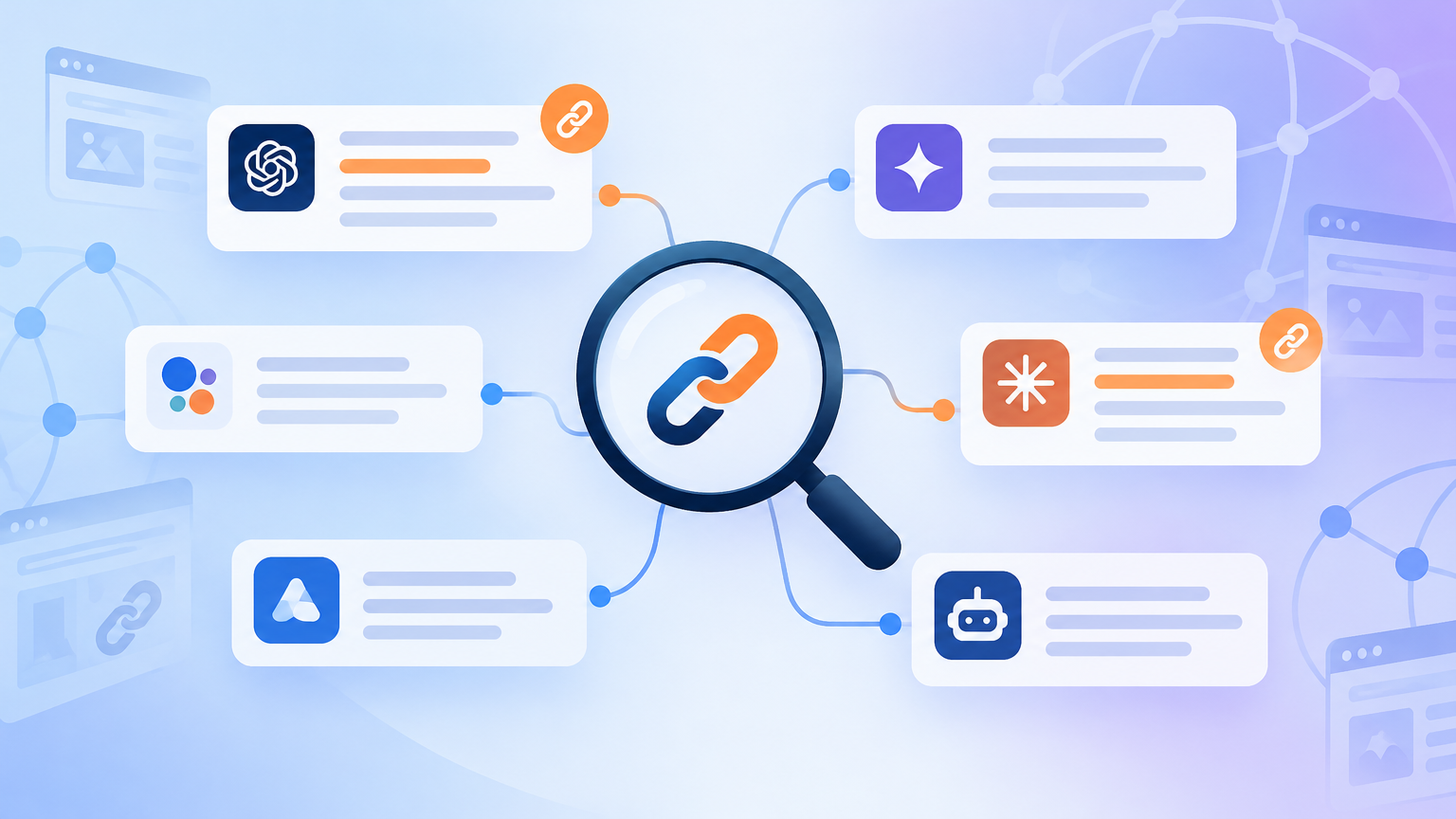
AI visibility tools show you whether ChatGPT, Perplexity, Gemini and Google's AI Overviews mention your brand, which sources they cite, and how you compare with competitors. My #1 pick for most B2B and SaaS teams is Ahrefs Brand Radar, because it shows not only where you appear but which domains and pages the AI engines lean on, and those pages are your next outreach list.
Below are the 9 best AI visibility tools I would shortlist in 2026, with what each is best for, which AI platforms it tracks and what it costs.
I have spent more than 8 years in link building and outreach, so I look at these tools through one lens: do they help me decide which sites to earn mentions and links on? That is where most AI visibility is won or lost.
Want a quick starting point before you pay for any tool? Ask Linkzy for a free AI Visibility + Backlink Audit and we will show you where your brand stands in AI answers and which cited sites are worth targeting.
What are AI visibility tools?
AI visibility tools run a set of prompts (the questions your buyers type into AI assistants) across AI platforms on a schedule, then record what comes back.
Most of them report on four things:
- Mention rate: how often your brand appears in answers for your prompts.
- Share of voice: your mentions compared with competitors.
- Citations: which URLs and domains the AI links to or draws from.
- Sentiment: whether the answer describes you positively, neutrally or negatively.
Position Digital's review of AI visibility tracking tools recommends tracking exactly these four metrics, and treating the results as directional because AI answers are personalised and change often.
That last point matters. These tools are great for spotting trends and gaps against competitors. They are less reliable at telling you exactly what one specific buyer saw on one specific day.
The best AI visibility tools at a glance
Prices below are starting prices as published or reported in autumn 2026. They change often in this category, so check the vendor's pricing page before you buy.
| Tool | Best for | Starting price | Main AI platforms covered |
|---|---|---|---|
| Ahrefs Brand Radar | Link builders and competitor benchmarking | $199/month (select platforms) | ChatGPT, Perplexity, Gemini, Copilot, AI Overviews, AI Mode |
| Semrush AI Visibility Toolkit | Teams already on Semrush | $99/month per domain | ChatGPT, Perplexity, Gemini, AI Mode, Copilot |
| Peec AI | Citation analysis for agencies | $95/month | Pick 3 of AI Overviews, AI Mode, ChatGPT, Perplexity, Gemini, Copilot |
| Profound | Enterprise brands | Custom (agency plan from $99/month plus $399 per client) | Up to 9 engines on Enterprise |
| Scrunch | Actionable GEO insights | $250/month | Up to 9 engines, including Claude and Grok |
| OtterlyAI | Small budgets | $29/month | ChatGPT, AI Overviews, Perplexity, Copilot |
| Rankscale | Cheap, detailed drill-downs | $20/month | 17+ engines |
| SE Ranking | AI visibility next to classic SEO | $129/month | AI Overviews, AI Mode, ChatGPT, Gemini, Perplexity |
| Wellows | Outreach and content opportunities | $37 per domain/month | ChatGPT on Lite, more engines on higher plans |
The 9 best AI visibility tools, ranked
1. Ahrefs Brand Radar: best for link builders
Brand Radar is Ahrefs' AI visibility product. According to Ahrefs' own page, it covers ChatGPT, Gemini, Perplexity, Copilot, Google AI Overviews and AI Mode, with historical trends, AI share of voice, competitor benchmarking and custom prompt tracking.
Pricing, as listed by Ahrefs: $199/month if you choose individual AI platforms, or $699/month for all platforms with the full prompt database and 2,500 custom prompt checks a month. Zapier's roundup describes it as an add-on to an existing Ahrefs plan.
Why it is my #1 for this audience: it shows the domains and pages most often cited alongside your brand. For a link builder, that is a ready-made prospect list.
Ahrefs also has a free AI Visibility Checker. You type in a brand and get a one-time snapshot of mentions, top topics and cited domains, with no account needed. It only shows the top 5 results per section and has no history, but it is a good free first look.
2. Semrush AI Visibility Toolkit: best if you already use Semrush
Semrush's toolkit tracks mentions, citations, sentiment and competitors, and connects to the rest of Semrush (site audits, backlink analysis and so on).
Position Digital lists coverage of ChatGPT, Perplexity, Gemini, Google AI Mode and Copilot, with Claude, DeepSeek and Grok added on the Enterprise AIO tier. Pricing starts at $99/month per domain.
The trade off: it is more complex than a single purpose tracker, and it is overkill if you do not already run your SEO workflow inside Semrush.
3. Peec AI: best for citation analysis
Peec AI is popular with agencies because it suggests prompts and competitors for you, supports multi-client projects and has a Looker Studio connector.
The Starter plan is $95/month for 50 prompts, with a free trial, according to Zapier. The catch: you choose 3 AI engines per plan, and Claude and DeepSeek need Enterprise.
4. Profound: best for enterprise brands
Profound tracks up to 9 answer engines on its Enterprise plan, including ChatGPT, Perplexity, AI Mode, Gemini, Copilot, Claude and AI Overviews.
Be careful with older reviews. GEO Toolbox reports that Profound withdrew its self-serve brand plans in mid-September 2026. Enterprise is now custom priced, and the Agency Growth plan is $99/month plus $399/month per client workspace. GEO Toolbox sells a competing product, so confirm the figures on Profound's site.
5. Scrunch: best for actionable GEO insights
Scrunch stands out for filtering and segmentation: you can split visibility by persona and buying stage, which is useful for B2B teams with several buyer types.
It starts at $250/month and covers up to nine engines (all nine on Enterprise), per Position Digital. Reviewers note that the reporting can feel overwhelming at first.
6. OtterlyAI: best for small budgets
OtterlyAI starts at $29/month on its Lite plan, which covers Google AI Overviews, ChatGPT, Perplexity and Microsoft Copilot. Claude, AI Mode and Gemini are paid add-ons.
It turns your SEO keywords into AI prompts and includes a GEO audit, which makes it an easy first tool for a small team.
7. Rankscale: best value for detailed reporting
Rankscale starts at $20/month and covers 17+ engines, including ChatGPT, Perplexity, Claude, Gemini, AI Overviews, AI Mode, DeepSeek, Grok and Copilot.
You can drill down to individual prompts and citations, and it connects to Looker Studio. It suits teams that already have a GEO process and want cheap, granular data.
8. SE Ranking: best for AI visibility next to classic SEO
SE Ranking adds AI visibility tracking (AI Overviews, AI Mode, ChatGPT, Gemini and Perplexity) to a full SEO suite, from $129/month. API and MCP access are included, per Position Digital.
9. Wellows: best for spotting outreach opportunities
Wellows is the one on this list built most clearly around outreach and content opportunities, with Search Console integration and daily monitoring. It starts at $37 per domain/month.
The cheapest plan only tracks ChatGPT, so you need a higher tier for multi-engine coverage.
Every tool above will show you the gap. None of them will close it for you. If your competitors keep getting cited and you do not, Linkzy can place your brand on the relevant, high traffic sites that AI engines already trust.
How to choose the right AI visibility tool
Run through this checklist before you commit to an annual plan:
- Platform coverage. List the AI assistants your buyers actually use, then check the tool covers all of them on the plan you can afford (not just on Enterprise).
- Prompt limits and refresh rate. Position Digital found these explain most of the price gap between cheap and expensive plans.
- Citation data. For link building, you need to see which domains and URLs are cited, not just a visibility score.
- Competitor tracking. Make sure you can add your real competitors, not only the ones the tool suggests.
- Reporting. Agencies should check for multi-client projects, white label reports or a Looker Studio connector.
- Data collection method. Some tools use official AI APIs, which can differ from what people see in the apps. Ask how the data is collected.
- Fit with your stack. If you already pay for Ahrefs or Semrush, start with their add-on before buying another subscription.
How I use AI visibility tools to build better links
This is the workflow I would set up for a B2B or SaaS brand.
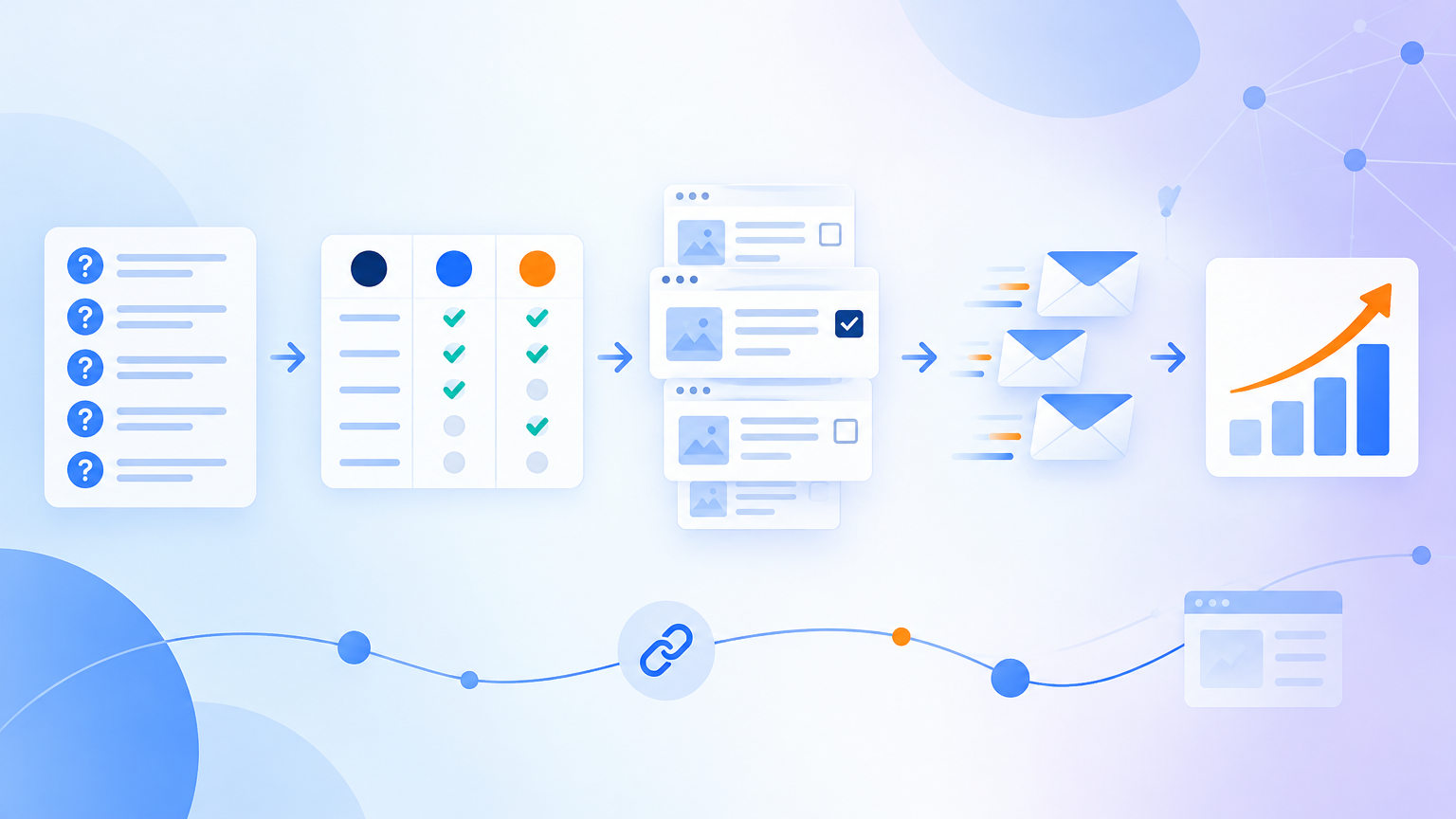
- Build prompts from real buyer questions. Pull them from sales calls, support tickets and Reddit threads, not only from the tool's suggestions.
- Track 5 competitors. Pick the brands you lose deals to, not the biggest names in the space.
- Find the gaps. Filter for prompts where competitors are mentioned and you are not.
- Export the cited domains. Look at which sites the AI pulls from for those prompts: review sites, industry blogs, comparison posts, listicles.
- Turn the list into outreach. Pitch guest posts, ask to be added to existing roundups, or offer data and expert quotes.
- Re-check monthly. Watch whether your mention rate and citations move for the prompts you targeted.
I go deeper on the outreach side in our guide on how to get ChatGPT and Perplexity to cite your brand, and on Google specifically in our AI Overview optimisation guide.
Two technical checks before you blame the tool for low numbers: make sure your robots.txt is not blocking AI crawlers such as OAI-SearchBot and PerplexityBot, and make sure your key pages can be crawled without JavaScript errors.
Free AI visibility tools worth trying first
If you are not ready to pay yet, start here:
- Ahrefs AI Visibility Checker: free, no account, a one-time snapshot across the main AI platforms.
- Free trials: Peec AI and Profound both offer trials, so you can test them on your own prompts before paying.
- Manual spot checks: run 10 of your most important buyer questions in ChatGPT, Perplexity and Gemini each month and log the answers in a spreadsheet. It is slow, but it is free and it teaches you what to look for.
Not sure where to start? Request a free AI Visibility + Backlink Audit from Linkzy. You will see how often AI answers mention you, which sites they cite instead, and where a few strong placements would make the biggest difference.
FAQ
What are AI visibility tools?
AI visibility tools track how often AI assistants such as ChatGPT, Perplexity, Gemini and Google AI Overviews mention or cite your brand for a set of prompts. Most also show competitor share of voice, the sources cited and sentiment.
Are there free AI visibility tools?
Yes. Ahrefs has a free AI Visibility Checker that gives a one-time snapshot with no account. Several paid tools, including Peec AI and Profound, offer free trials. For ongoing tracking with history, you will need a paid plan.
How much do AI visibility tools cost?
Entry plans range from about $20/month (Rankscale) and $29/month (OtterlyAI) to $95 to $250/month for mid-market tools like Peec AI and Scrunch. Enterprise tools such as Profound are custom priced. Prices change often, so check each vendor's page.
How accurate are AI visibility tools?
They are useful for trends and competitor gaps, but AI answers vary by user, location and time, and some tools use APIs that differ from the consumer apps. Treat the numbers as directional and compare them over months, not days.
Do backlinks help AI visibility?
AI engines draw on web pages they can find and trust, so being mentioned and linked on the sites they already cite is one of the most practical ways to improve visibility. A common recommendation in the tool reviews above is to start with prompts where competitors appear and then target the sources being cited. For the bigger picture, see AISO vs traditional SEO.
The bottom line
Pick one AI visibility tool that covers the assistants your buyers use and shows citation data, then use it every month. For most B2B and SaaS teams that means Ahrefs Brand Radar or the Semrush toolkit; on a tight budget, OtterlyAI or Rankscale.
Then do the part the tools cannot: earn mentions on the sites AI already trusts. That is what Linkzy does, with manually placed guest posts on vetted, relevant sites. Start with a free audit and a set of sample sites, and see where your brand could show up next.