How to Get Backlinks: 9 Methods That Still Work (2026)
By Linkzy ·

The best way to get backlinks is to give a relevant website a real reason to link to one of your pages, then ask the right person at the right time.
That means three things: a page worth citing, a short list of sites whose readers would genuinely use it, and an honest pitch.
This guide shows you which method fits which page, how to run each one step by step, and what to avoid so your links help rather than hurt.
New to the basics? Start with what backlinks are and how to review them, then come back here for the how-to.
Want the links without the legwork? Linkzy handles prospecting, outreach and placement on real, relevant publishers.
How to get backlinks: match the method to the page
Most link building fails before the first email, because people try to get links to the wrong page.
A product page rarely earns links on its own. A useful guide, tool or data page often does.
Pick your target page first, then use this table to choose the method.
| Target page | Best methods | Effort | Speed |
|---|---|---|---|
| Original data, survey or study | Digital PR, journalist requests, outreach to writers who cover the topic | High | Medium |
| Free tool, template or calculator | Resource pages, outreach to roundup authors | Medium | Medium |
| In-depth guide | Broken link building, guest posts, unlinked mentions | Medium | Slow to medium |
| Homepage or brand | Unlinked mentions, partners, associations, directories that matter in your niche | Low | Fast |
| Product, service or category page | Guest posts and editorial placements with a relevant, natural mention | Medium | Medium |
If you have no page in the top two rows yet, the fastest win is often to build one. A simple checklist, template or benchmark page that your buyers actually use gives every method below something to point at.
9 ways to get backlinks (step by step)
1. Reclaim unlinked brand mentions
People sometimes mention your brand without linking to you. These are the easiest links you will ever get, because the writer already knows you.
- Search for your brand name in quotes in Google, and set up a free alert for it.
- Open each result and check whether the mention links to your site.
- Email the author or editor with a short, friendly note and the exact URL you suggest.
Keep it to three sentences. You are making their article more useful, not asking a favour.
2. Fix broken links that point to your own site
If you have moved or deleted pages, other sites may still link to the old URLs and land on a 404.
- Open the Links report in Google Search Console and export your top linked pages.
- Check which of those URLs no longer load.
- Redirect each one to the closest equivalent live page (not your homepage).
This does not add new links, but it recovers value you already earned.
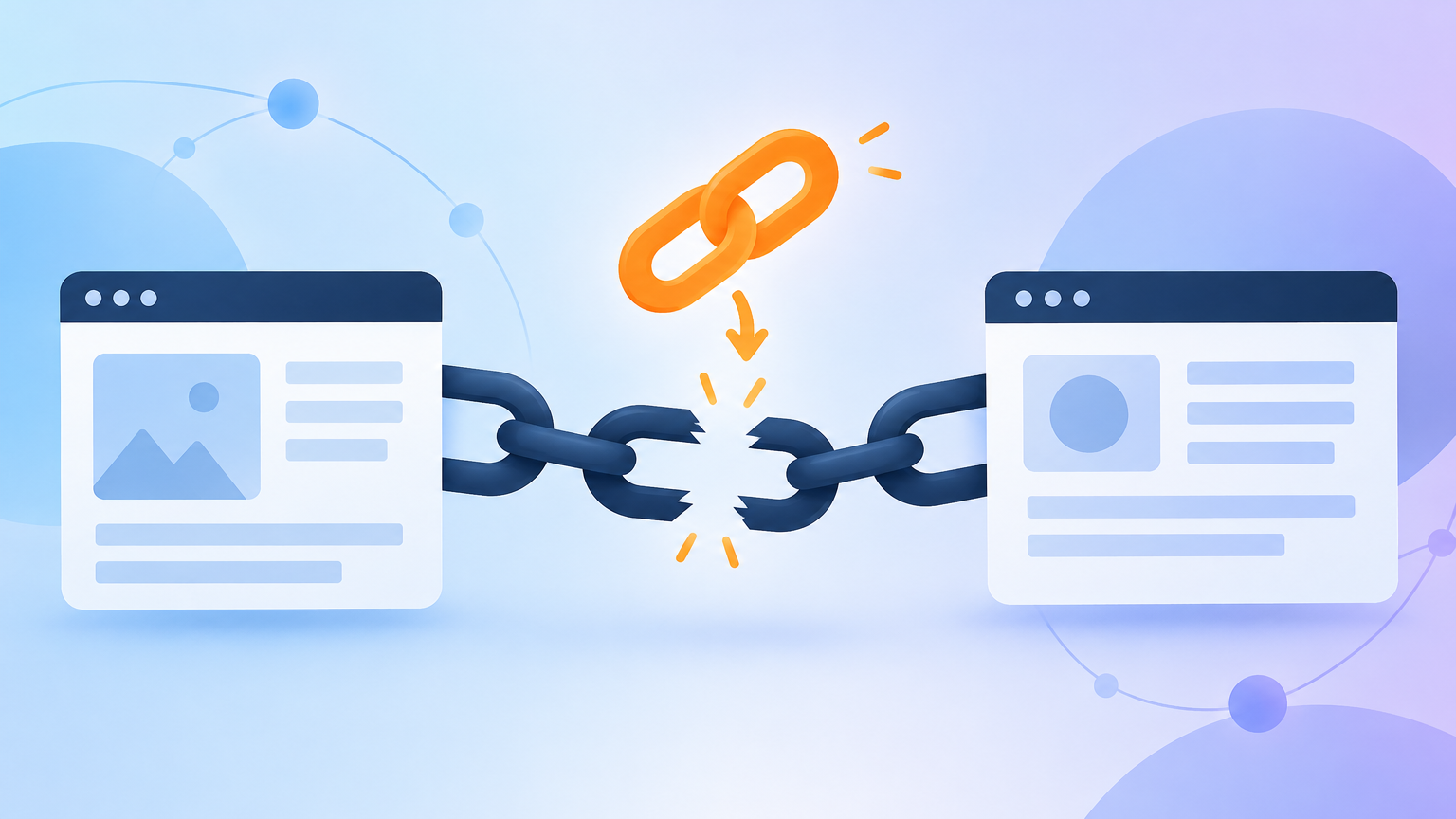
3. Broken link building
Find pages in your niche that link to a resource that no longer exists, then suggest your page as the replacement.
- Find a dead resource that used to be popular in your topic.
- Pull the pages that still link to it with a backlink tool.
- Make sure your page genuinely covers the same need.
- Email each linking site, point out the broken link, and offer yours.
We cover the full process in our broken link building step-by-step guide.
4. Guest posts on relevant sites
A guest post is an article you write for another site, with a natural link back to a relevant page of yours.
- List sites whose readers match your buyers, with real organic traffic. Ignore sites that publish anything for anyone.
- Read their recent articles and find a topic gap you can genuinely fill.
- Pitch one specific idea, not "can I write for you?".
- Write something better than their average post, and link to your page only where it helps the reader.
Read the guest posting strategy that still works before you send your first pitch.
Short on time for prospecting and pitching? Linkzy handles the outreach and places links on real, relevant publishers for you.
5. Answer journalist requests
Journalists and bloggers regularly ask for expert comments. A useful quote can earn a link from a news or industry site.
- Sign up to a few expert request platforms in your niche.
- Answer only the requests where you have real experience.
- Reply fast, keep it short, and include your name, title and one line of credentials.
Our modern HARO playbook explains how to write answers that get picked.
6. Resource pages and roundups
Many sites keep lists of useful tools, templates and guides for their readers.
- Search for pages like "[your topic] resources" or "[your topic] tools".
- Check that the list is maintained and that your page fits it.
- Send a short note explaining what your resource does and why it suits their list.
This works best for free tools, templates and checklists.
7. Partners, suppliers and customers
The businesses you already work with often have partner, integration or "who we work with" pages.
- List your technology partners, suppliers, agencies and happy customers.
- Check whether they have a page where you would fit.
- Ask, and offer a testimonial or a case study in return if it helps them.
These links are relevant by nature, because the relationship is real.
8. Associations and directories that matter
A handful of directories are worth being on: industry associations, chambers of commerce, and the few listings your buyers actually use to compare providers.
Skip bulk directory submissions. Google lists low quality directory links as a form of link spam.
9. Create a page that earns links on its own
The methods above all work better when you have something worth citing. Good link magnets include:
- Original data from your own work (with the method and sample explained)
- A free template, checklist or calculator
- A clear comparison that saves people hours of research
- A glossary or definitions page for a confusing topic
Build one, then promote it with methods 3 to 6.
The outreach email that gets replies
Whatever the method, the email decides the result. Keep it short and specific:
- Use their name and mention the exact article you are writing about.
- Say in one sentence why your page helps their readers.
- Make it easy: give the URL and, if relevant, where it fits.
- Follow up once after a few days, then move on.
Need wording? Use our link building outreach email templates.
What to avoid
Google's link spam policies include buying or selling links for ranking purposes, excessive link exchanges, automated link creation and low quality directory links.
In practice, avoid:
- Private blog networks (PBNs) and sites that link to every niche at once
- Links inserted into unrelated articles
- Paid placements that hide the fact they are paid
- Site-wide footer links and mass link swaps
If a placement is paid, Google asks for it to be qualified with rel="sponsored" (nofollow is also accepted).
See the link building mistakes to avoid for more red flags.
A simple 30-day plan
| Week | Focus | Output |
|---|---|---|
| 1 | Pick 1 target page, fix any broken links to your site, reclaim unlinked mentions | Quick wins, a clean starting point |
| 2 | Build a prospect list of 30 to 50 relevant sites and check their traffic | A vetted list, no spam sites |
| 3 | Run outreach: broken link, resource page or guest post pitches | 30 to 50 personalised emails |
| 4 | Follow up once, answer journalist requests, review what got replies | Live links and a list of what worked |
Repeat the cycle with your next target page. If you would rather skip the prospecting and pitching, Linkzy runs this process for you.
FAQ
How can I get backlinks for free?
Reclaim unlinked brand mentions, fix broken links to your site, answer journalist requests, and ask partners and suppliers. These cost time, not money.
How much do backlinks cost?
Prices vary widely by site, niche and how the link is placed. At Linkzy, the Starter package is 5 links for $1,500, delivered in 3 to 4 weeks, with gambling, crypto and loans quoted separately.
Do backlinks still matter in 2026?
Yes. Google says it uses links to discover pages and understand their relevance. Relevant links from real sites still help, while spammy links can hurt.
Is buying backlinks illegal?
No, but buying links to manipulate rankings goes against Google's spam policies. Paid placements should be marked with rel="sponsored".
How many backlinks do I need?
There is no fixed number. Look at the pages ranking for your target keyword and compare their relevant referring domains, not total link counts.
Ready to build links without doing the outreach yourself? See Linkzy's link building packages.