How to Check if a Ranking Drop Is Real (Poisoned SERPs)
By Linkzy ·

To check if a ranking drop is real, compare your rank tracker with Google Search Console clicks and impressions for the same page and dates: if Search Console is flat, the drop is almost certainly bad tracker data.
That matters more than usual right now, because Google has been feeding rank trackers poisoned SERPs since September 2026.
Here is the result you want by the end of this guide: a five minute routine that tells you whether to fix something or simply wait.
The result first: real drop or fake drop?
Use this table as your quick answer.
| What you see | Likely cause | What to do |
|---|---|---|
| Tracker drop, Search Console flat, traffic flat | Bad tracker data (possibly poisoned SERPs) | Wait 2 to 3 days, recheck |
| Tracker drop, Search Console impressions down, clicks down | Real ranking loss | Investigate the page |
| Tracker drop on page 2 or beyond only | Most likely tracker noise | Ignore unless it persists |
| Drop shows in one tool but not another | Bad data in one tool | Report it to that tool's support |
| Drop across many pages at once, matches a Google update | Real, update related | Review quality and links site wide |
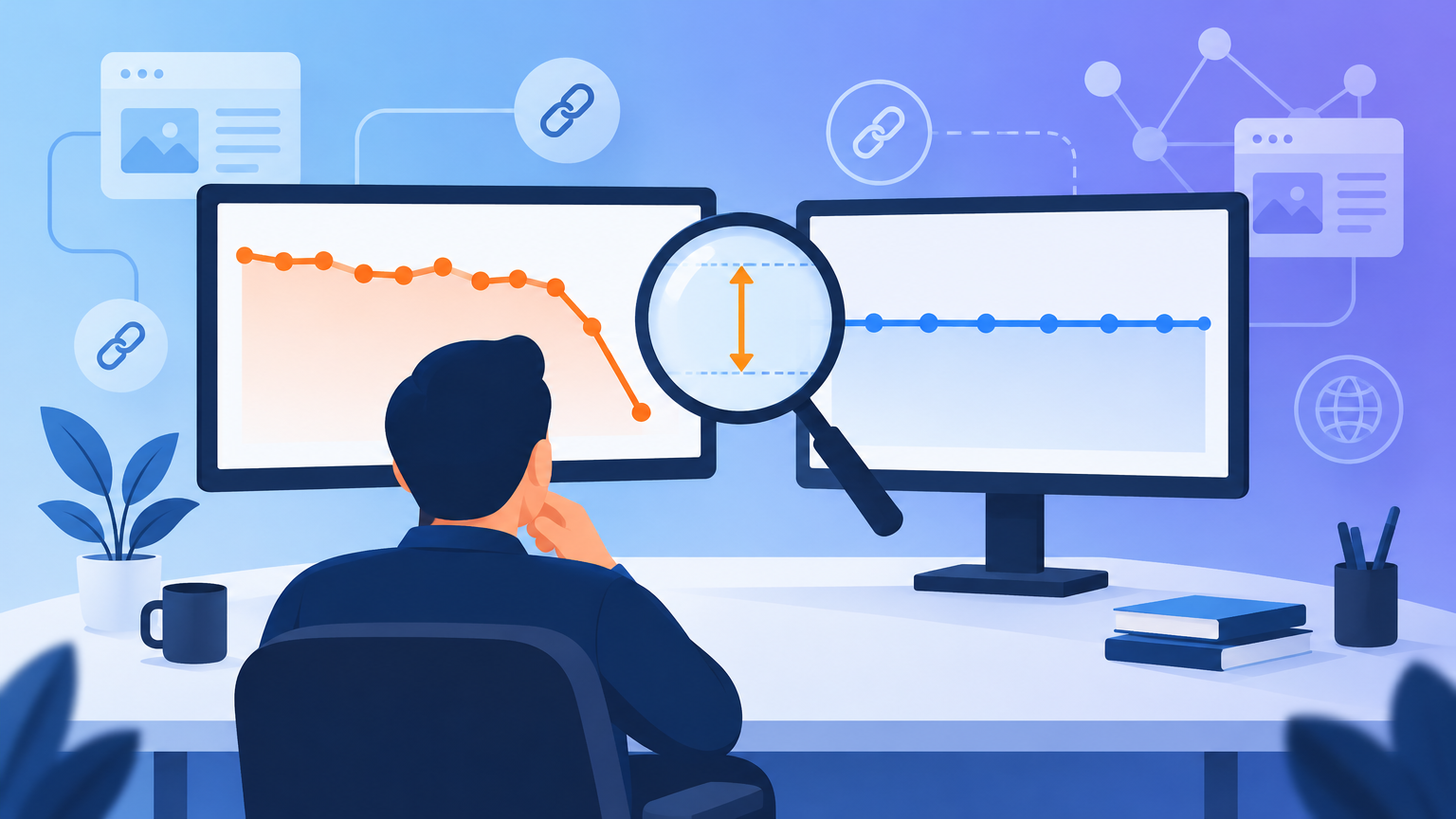
Now the steps.
Why rank tracker drops are less reliable in 2026
Rank trackers scrape Google. Google has been making that harder.
According to Nozzle's study, summarised by PPC Land, 8.0% of the pages it collected from mid September 2026 were poisoned, with peaks of up to 27% between 27 and 29 September. On those pages the tracked site was missing from the top 10 58.6% of the time.
Semrush confirmed on 27 October that it has seen the same issue since late summer, and Ahrefs said 5% to 20% of results were affected depending on the data provider.
So a drop in your tracker is now a question, not an answer.
Need a second opinion on your visibility, including AI answers? Grab a free AI visibility audit from Linkzy.
How to check if a ranking drop is real: 7 steps
Step 1: Note the exact keyword, page and dates
Write down the keyword, the URL that ranks, the old position, the new position and the date the tracker recorded the drop.
You will need these for every check below.
Step 2: Check Search Console for the same page
Open Search Console, go to Performance, filter by the page and then by the query.
Compare the 7 days before the drop with the days after it.
If impressions and clicks are steady, real searchers are still finding you. That is your strongest signal.
Bear in mind Search Console data usually lags by a day or two, and it shows an average position, not a daily snapshot. I explain the difference in detail in Search Console vs rank tracker.
Step 3: Check traffic and conversions in GA4
Look at organic sessions and conversions to that page for the same dates.
A real top 10 drop on a keyword that matters usually shows up as fewer visits within days.
Step 4: Spot check the live SERP
Open a private browser window, set the right country and device if you can, and search the keyword.
One manual check is not perfect, because results vary by location and personalisation. But if you are sitting at position 4 and your tracker says 23, you have learned something.
Step 5: Compare with a second tool
If you have access to two trackers, check both.
Glenn Gabe reported that Ahrefs, Semrush and SISTRIX picked up the same drops and recoveries at different speeds this autumn. If only one tool shows the drop, be sceptical.
Step 6: Look at what replaced you
Click into the tracker's stored SERP for that day if it has one.
Nozzle found that on poisoned pages, social and forum sites such as Reddit, Facebook and LinkedIn filled the gaps. Semrush's own example was a baby stroller search returning a dental equipment page.
If the "new" top 10 makes no sense for the query, the page was probably poisoned.
Step 7: Wait, then recheck
Nozzle found 80% of poisoned episodes lasted one collection, and on 77.9% of affected pages the usual sites came back within three days.
If you can, run a manual refresh where your tool allows it (SE Ranking is one that does), or simply recheck after two or three days.
Checklist: copy this into your reporting doc
- Keyword, URL, old and new position, date noted
- Search Console clicks and impressions compared (7 days before vs after)
- GA4 organic sessions and conversions compared
- Private window spot check done
- Second tool checked
- Stored SERP reviewed for odd replacements
- Rechecked after 2 to 3 days
- If still unclear, reported to tool support with domain and keywords
In many cases you will have your answer by step 2.
When the drop is real: what to do next
Sometimes the drop is real. Google ran a spam update from 24 September to 8 October 2026, overlapping the poisoning window, so some sites did lose rankings.
If Search Console confirms it, work through these:
- Check if many pages dropped at once. A site wide drop points to an update, not a single page issue.
- Compare your page with the pages that now outrank you. Look at depth, freshness and how well they answer the query.
- Review your backlink profile. Lost links, or a reliance on low quality links, can show up after updates. My guide to quality backlinks covers what to keep and what to worry about.
- Strengthen internal links to the page from your most relevant content.
- Earn fresh links from trusted, relevant sites to rebuild authority.
That last step is where Linkzy helps. Linkzy places your content on real, relevant sites so your recovery shows up in Search Console, not just in a tracker.
Tips and gotchas
- Do not rebuild a page because of one tracker reading. Rewrites can cause real drops.
- Be careful with client reports for late September and October 2026. Add a note that tracker data for that period was affected industry wide.
- Historical charts may change. Ahrefs says it is cleaning past data, so save the date you pulled any export.
- Positions beyond 10 are the noisiest. Semrush and BrightLocal both say most problems sit beyond page one.
- Search Console does not show competitors. You still need a tracker for competitive views, just with more caution.
Want to know if you can trust Semrush specifically? Read is Semrush accurate.
Before you jump into the FAQ: if you want links you can measure in your own data, Linkzy's guest post service is built for exactly that.
FAQ
How do I know if my ranking drop is real?
Check Search Console. If clicks and impressions for the page and keyword are steady, the drop is most likely a tracker error. If both fell, the drop is real.
Why did my rankings drop overnight?
It could be a real change, such as a Google update, or bad data. Since September 2026, Google has served poisoned SERPs to rank trackers, which can show fake overnight drops that recover within days.
How long do fake ranking drops last?
In Nozzle's data, 80% of poisoned episodes lasted one collection, and the usual sites returned within three days on 77.9% of affected pages.
Is Search Console more accurate than rank trackers?
For your own site, Search Console reflects Google's own data, so it is the better source of truth. Rank trackers are still useful for daily positions and competitor views.
Should I report bad ranking data to my tool?
Yes. Semrush asks users to contact support with the domain and keywords, and other vendors offer status pages or manual refreshes.
Final thoughts
A drop in a tracker is a prompt to check, not a reason to panic.
Run the seven steps, trust Search Console for your own site, and keep investing in the content and links that real searchers reward.
When you are ready to build authority you can see in your own data, talk to Linkzy.